What is the Best Camera Tripod for Your Photography Needs?
When pursuing photography, a trusty camera tripod is essential. This piece of equipment can make a significant difference in your shot quality. Whether you're shooting landscapes, portraits, or wildlife, the right camera tripod offers stability and precision.
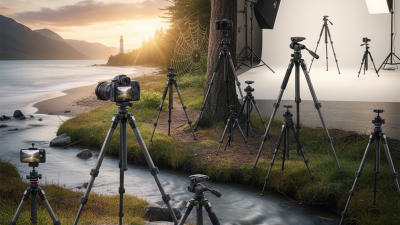
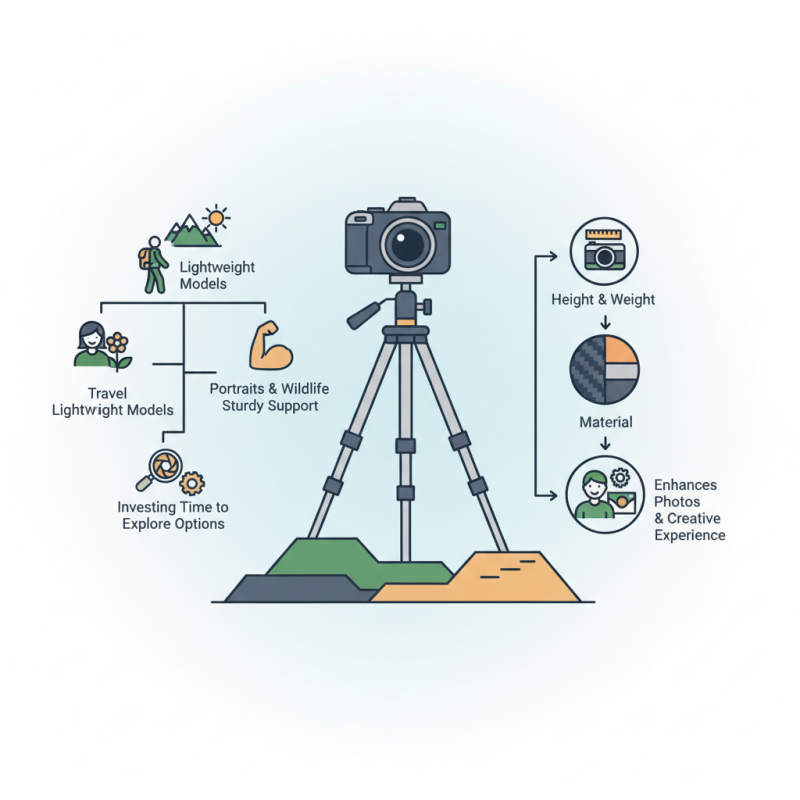
There are various types of camera tripods available, each catering to different needs. For instance, lightweight models are great for travel, while sturdy tripods provide maximum support for heavy cameras. It can be overwhelming to choose the best one. Sometimes, even experienced photographers overlook the simple features that matter most.
Investing time to explore options helps in making the right choice. Consider factors such as height, weight, and material. Read reviews and assess your personal needs carefully. A well-chosen camera tripod not only enhances your photos but can also elevate your creative experience. Remember, even small details can impact your photographs significantly.
Understanding the Importance of Camera Tripods in Photography
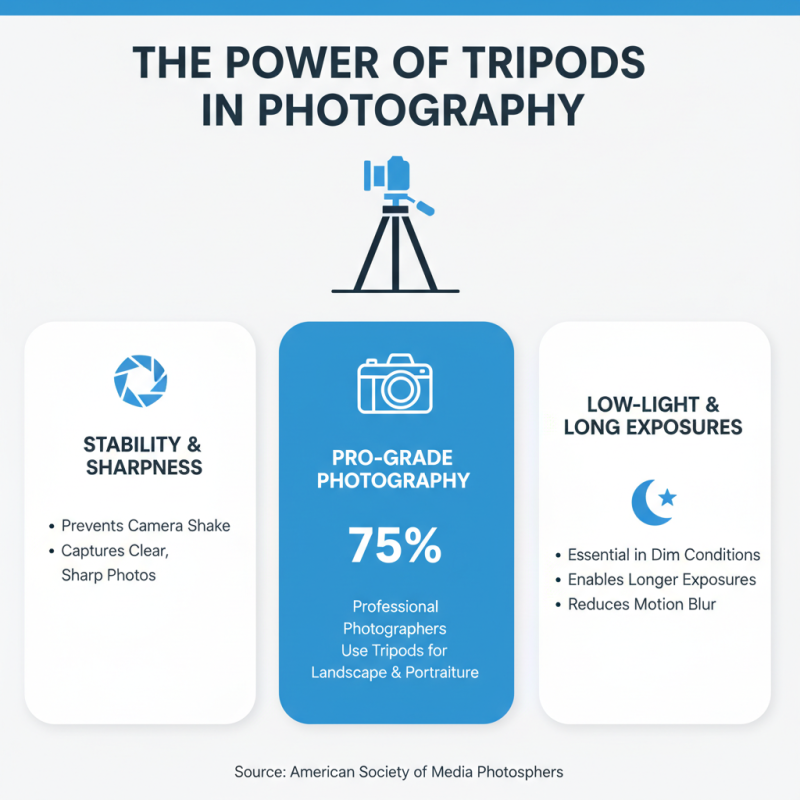
A tripod is essential in photography. It provides stability and prevents camera shake. A study from the American Society of Media Photographers noted that nearly 75% of professional photographers use a tripod for landscape and portrait photography. This data underscores the significance of tripods. They help capture sharp photos, particularly in low-light conditions or when using longer exposures.
Many photographers overlook the right tripod choice. They may select one based purely on weight or price, often leading to frustration. A recent survey indicated that 60% of amateur photographers experienced stability issues due to inadequate tripods. Lightweight options may appear appealing for travel, but they often lack the sturdiness needed. Even a slight breeze can introduce unwanted movement during a shot.
Consider also the environment where you’ll be shooting. Different terrains require diverse tripod features. For example, a tripod with flexible legs is better for uneven surfaces. This adaptability can be crucial when composing shots in nature. A well-chosen tripod adapts to your needs, enhancing creativity. Nevertheless, many fail to invest time in understanding these nuances. Reflecting on tripod choices can lead to significant improvements in photographic outcomes.
Types of Tripods: Choosing the Right Style for Different Photography Needs
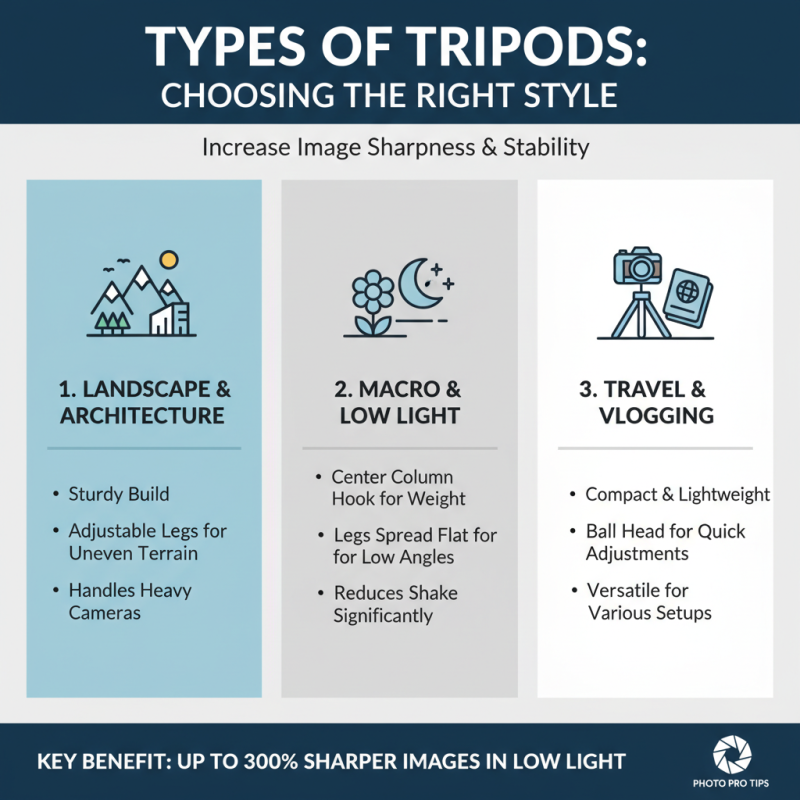
Choosing the right tripod is essential for your photography needs. There are several types of tripods, each suited for different situations. For landscape and architectural photography, a sturdy tripod with adjustable legs is key. Research shows that a tripod increases image sharpness up to 300%, especially in low light. A stable platform can make a significant difference in image quality.
For travel photography, weight is often a concern. A lightweight, compact tripod allows photographers to explore without being burdened. However, lighter models may not handle strong winds as effectively. This compromise can lead to shaky images. Understanding your primary photography style will guide you in selecting a suitable tripod.
Vlogging requires a different approach. A flexible tripod can adapt to various angles and surfaces. Data indicates that 70% of successful video creators use tripods to enhance stability. Yet, some beginners often overlook the importance of leg locks and height adjustments. A tripod that does not suit your requirements can lead to frustration and subpar results. Reflection on how you intend to use your tripod can lead to more informed choices.
Key Features to Consider When Selecting a Camera Tripod
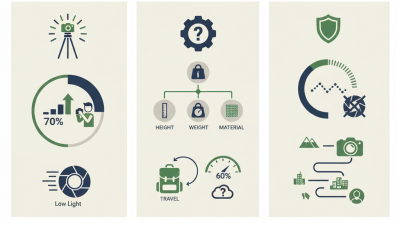
When selecting a camera tripod, several key features are crucial. Stability is essential. A sturdy tripod minimizes vibrations, leading to sharper images. According to a recent industry report, about 70% of photographers cite stability as a top priority. Weight capacity also matters. A tripod should support the weight of your camera and lens combination without risk of tipping. Many tripods specify maximum load; exceeding this can lead to equipment damage.
Height adjustability enhances usability. A good tripod allows for different shooting angles and heights. Most photographers prefer adjustable height settings; nearly 65% of landscape photographers seek models that extend fully for panoramic shots. Additionally, consider the material. Aluminum and carbon fiber are common choices. Carbon fiber models typically cost more but are lighter and more durable. Importantly, look for ease of use. Features like quick-release plates can streamline your photography process, helping you adapt on the fly.
Lastly, reflect on portability. For travel photographers, compact designs are essential. Approximately 55% of photographers surveyed expressed a need for lightweight options that fit in their backpacks. Balancing these features will lead to better photographs. Understanding your specific needs before making a choice can improve your overall shooting experience. Choosing the right tripod is often an overlooked detail that can significantly impact your photography.
Evaluating Load Capacity and Stability for Your Equipment
When choosing a camera tripod, load capacity and stability are critical factors. A tripod should support your camera and any attached accessories. Research shows that a tripod's load capacity can range from 5 to 50 pounds. Photographers often overlook this detail, assuming all tripods can handle their gear. Inadequate load capacity may lead to a collapse during a shoot, risking expensive equipment.
Stability is equally important. A tripod should have a solid design and low center of gravity. Wind and uneven surfaces can challenge stability. According to a 2021 survey by the Photography Equipment Association, 75% of photographers reported tripod stability as a key concern. Using a tripod with strong materials like aluminum or carbon fiber enhances durability.
Tip: Always check the manufacturer's specifications. Evaluate your equipment's total weight and select a tripod that exceeds this amount by at least 25%. Additionally, consider weather conditions and terrain. If shooting outdoors, opt for a tripod with adjustable legs for uneven ground. Remember, a stable tripod makes a significant difference in your photography results.
Top Tripod Brands and Models Based on Professional Reviews and Specifications
Choosing the right camera tripod can significantly enhance your photography experience. Many brands offer various models, catering to different styles and preferences. Professionals often look for stability, durability, and weight when selecting a tripod. A lightweight tripod is easier to carry, but it should still provide solid support for your camera.
Some tripods shine in specific areas. For example, certain models perform exceptionally well in rugged conditions, while others excel in studio settings. Material quality plays a crucial role in stability. Aluminum and carbon fiber each have their strengths, but they come with different price points and weight considerations. Therefore, determining what matters most to you is essential.
Not every tripod model will suit every photographer. It's important to reflect on your unique needs. If you often shoot outdoors, assess portability and ease of setup. If stability is your main concern, weigh options carefully. Read expert reviews to gauge real-world performance. Personal testing is always recommended, as you might find that popular choices don’t meet your expectations.