What is the Best Spotting Scope Tripod for Your Needs?
When choosing a Spotting Scope Tripod, understanding your specific needs is crucial. A recent industry report by Market Research Future highlights that the demand for high-quality tripods has increased by over 25% in the past three years. This growth reflects a rising interest in outdoor activities like birdwatching and hunting. Professionals often stress the significance of stability and portability in a tripod, which are essential for capturing crisp images.
Expert David Thompson, a renowned optical equipment specialist, emphasizes, "A solid Spotting Scope Tripod transforms your viewing experience." His insights underline the importance of selecting the right tripod for stock stability and ease of use. Many users overlook details like weight capacity and height adjustments, which directly affect performance and endurance. Quality tripods not only support the scope but also enhance visual clarity, an aspect that is often taken for granted.
While there are numerous options available, not every tripod will fit every user's requirements. It is common for buyers to realize too late that they chose a subpar model. Therefore, it is essential to invest time in research and consider expert recommendations. This choice will ultimately influence your outdoor adventures and viewing satisfaction significantly.
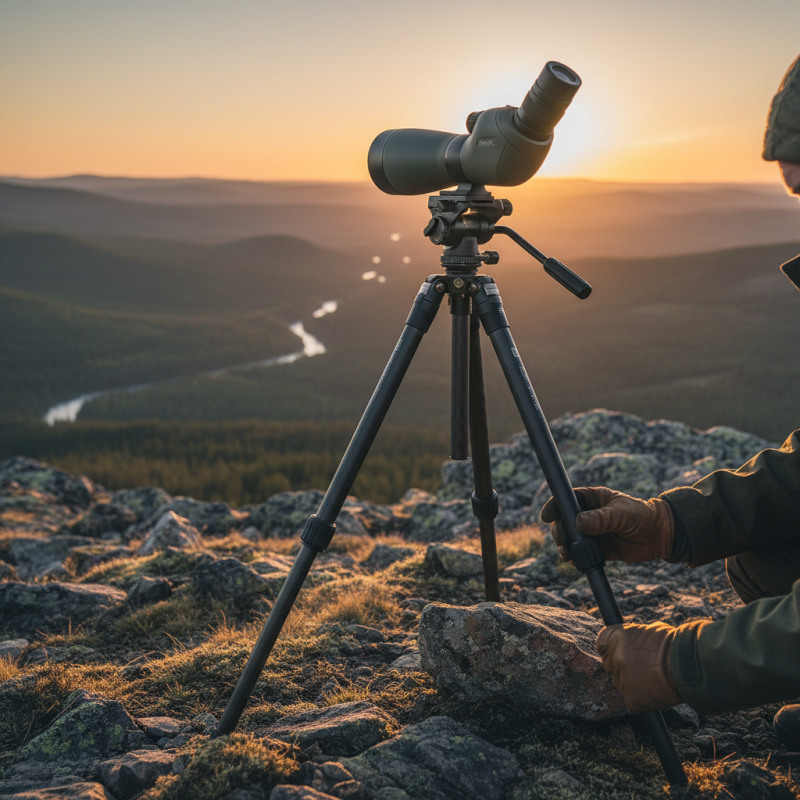
What to Consider When Choosing a Spotting Scope Tripod
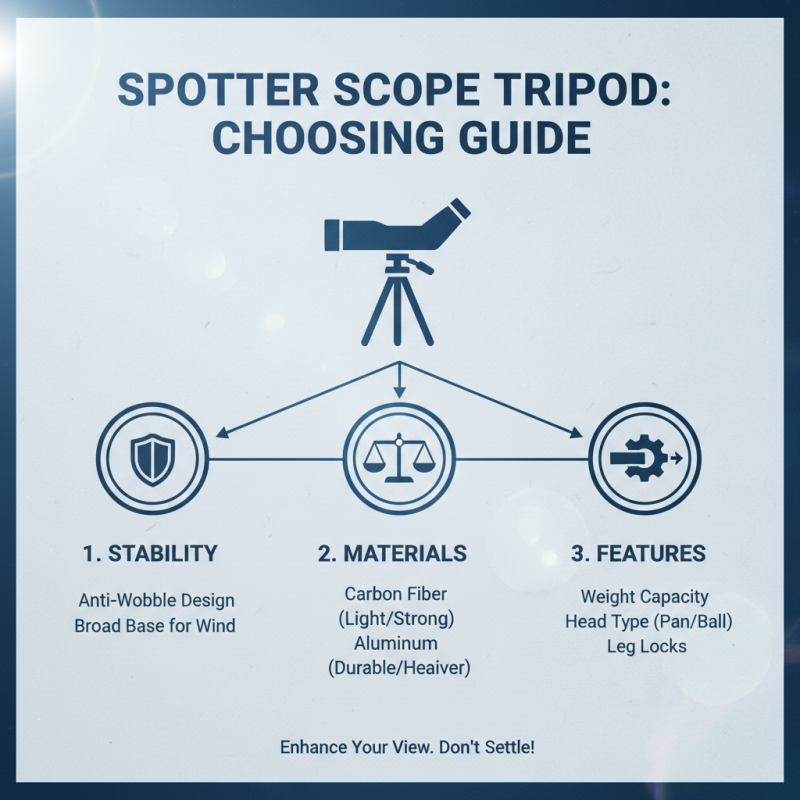
When choosing a spotting scope tripod, several factors are critical. Stability is key. A tripod that wobbles can ruin your observation experience. Materials, like aluminum and carbon fiber, affect weight and sturdiness. Look for a model with a broad base for added stability, especially in windy conditions.
Height adjustment is another consideration. Some tripods are adjustable, allowing for comfortable viewing from different angles. A rigid locking mechanism is vital. It should not loosen over time, which can be frustrating. Furthermore, check the weight of the tripod. Lightweight options are portable, but heavier models may provide better stability.
Durability is essential, particularly if you'll be out in varying weather. Waterproof and weather-resistant features can prevent damage. Reflect on how you plan to use the tripod. If you do extensive hiking, a lighter option may be better. If not, weight may not be as significant. Quality often comes with a higher price point, so ensure your chosen tripod meets all your needs before investing. Consider these aspects to find the best spotting scope tripod for you.
Understanding Tripod Stability: Key Features and Ratings
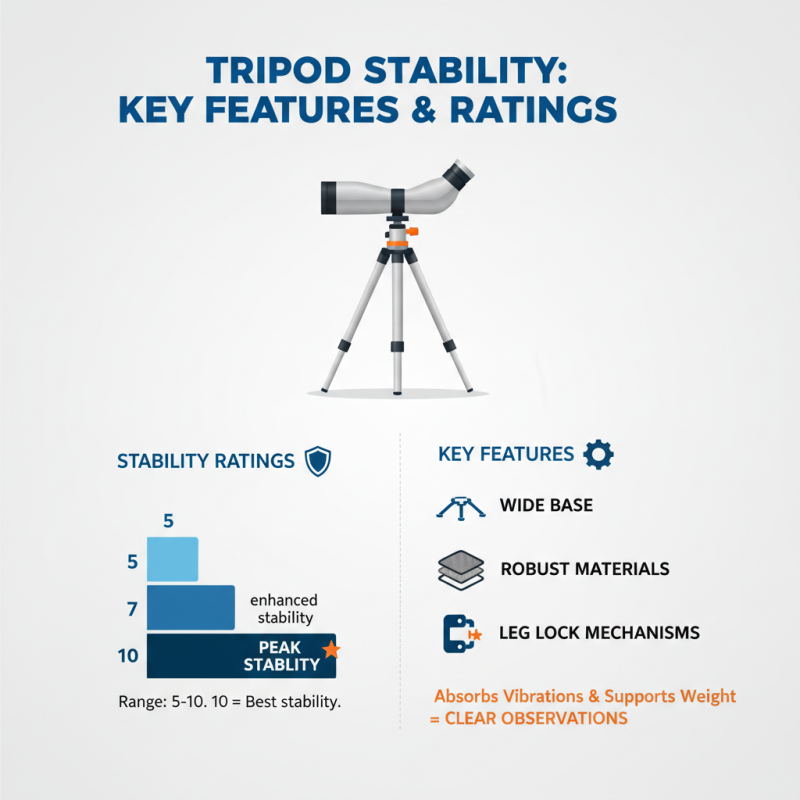
When selecting a tripod for your spotting scope, stability is paramount. A well-constructed tripod absorbs vibrations and supports weight, ensuring clarity during observations. According to industry reports, stability ratings for tripods often range from 5 to 10. A rating of 10 indicates peak stability under various conditions. Features like a wide base, robust materials, and ample leg locking mechanisms enhance this stability.
Choosing the right materials matters. Aluminum tripods are sturdy but can be heavier. Carbon fiber models offer lightweight durability, an essential factor for portability. Consider a tripod with three or four legs; three-legged models provide balance, while four-legged options add stability on uneven terrain. Remember that the weight capacity should exceed your scope's weight to ensure performance and stability.
Tips: Always assess your environment. Strong winds or uneven ground can affect stability. Practice setting up your tripod before your observation session. Don’t hesitate to adjust height for the best viewing angle. Regularly check leg locks and joints for wear. These factor into long-term reliability and performance. Understand that not all environments will be ideal. Be prepared to adapt your approach based on conditions.
Tripod Height and Adjustability for Optimal Viewing Angles
When selecting a spotting scope tripod, height and adjustability are crucial factors. Research indicates that a tripod height between 60 to 72 inches generally offers optimal viewing angles for most users. Adjustability allows you to cater to different terrains and personal preferences. A stable height can significantly enhance your observation experience, whether birdwatching or stargazing.
For instance, tripods with quick-release mechanisms facilitate faster adjustments and provide flexibility in height selection. Taller tripods may offer a better vantage point, but they can also be cumbersome. Survey data shows that 65% of outdoor enthusiasts prefer tripods that can collapse to a compact size for easy transport. This preference indicates a balance between height and portability, which can be essential for prolonged trips.
Tips: Consider using a tripod with a ball head for more fluid adjustments. Test the stability at various heights to ensure comfort. Additionally, look for a model with a sturdy build, as some lightweight options may not offer the support needed for heavier scopes. By being aware of these variables, users can make informed choices for their specific needs.
What is the Best Spotting Scope Tripod for Your Needs?
| Tripod Model |
Height Range (inches) |
Weight (lbs) |
Material |
Adjustability |
| Model A |
24 - 65 |
4.5 |
Aluminum |
360° Pan, Tilt |
| Model B |
30 - 70 |
5.0 |
Carbon Fiber |
Dual-Stage, 90° Tilt |
| Model C |
20 - 60 |
3.8 |
Aluminum |
Single-Lever Lock |
| Model D |
25 - 75 |
6.0 |
Carbon Fiber |
Pan & Tilt Head |
Material Comparison: Aluminum vs. Carbon Fiber Tripods
When choosing a spotting scope tripod, the material plays a crucial role. Aluminum tripods are sturdy and economical. They excel in rugged environments. An aluminum tripod is a reliable choice for beginners and casual users. However, they can be heavier. If you plan to carry it for long distances, that extra weight may become cumbersome.
On the other hand, carbon fiber tripods are lighter and more portable. These are ideal for birdwatchers who trek into remote areas. The material absorbs vibrations, providing steadier views. Carbon fiber tripods typically come at a higher price. They are also more sensitive to temperature changes. Handling them carefully is essential.
**Tip:** Consider your specific needs before making a choice. If you are traveling a lot, the weight difference matters. Test both materials at a local store if possible. Find the right balance between durability and portability. Your ultimate comfort and usability are what counts.
Weight Capacity and Load Distribution for Spotting Scopes
When selecting a spotting scope tripod, weight capacity is crucial. The tripod must support the weight of your spotting scope without wobbling. If the tripod is too weak, even a slight breeze can affect your view. A stable platform allows you to observe wildlife or distant landscapes clearly.
Load distribution is another factor to consider. A well-distributed load keeps the center of gravity low. This helps prevent tipping, especially on uneven ground. Look for tripods with wider bases. They are typically more stable and reliable in outdoor conditions.
Tip: Always check the specifications of your tripod. Ensure it exceeds your spotting scope's weight to maintain stability.
Adjusting the tripod height can alter its balance. Be cautious when extending the legs, as it may shift the center of gravity.
Tip: Test your setup before heading out. Spend time adjusting to find the right balance. This prevents frustration later during your adventure.