Leave Your Message

China Best Camera Tripod Manufacturers and Suppliers for Buyers

Choosing a Camera Tripod from China’s manufacturers and suppliers requires more than comparing prices or checking a catalog. Buyers need stable support, dependable locks, clear load ratings, and parts that remain available after purchase. A tripod that feels solid on a showroom floor may behave differently on a windy overlook or beside a busy road. Small details matter: leg sections should extend smoothly, the center column should not wobble, and the head should hold a camera without slowly drifting.

David duChemin, a photographer and educator, often emphasizes practical field use over gear for its own sake. His advice can be paraphrased in one sentence: “Choose support that serves the photograph, not the specification sheet.” That principle helps buyers assess suppliers beyond attractive product images. Ask how load capacity is tested, whether samples are available, and how the factory checks joints, finishes, and locking mechanisms. Requesting documentation is sensible. So is testing a sample yourself.

This guide introduces China-based Camera Tripod manufacturers and suppliers, along with the factors buyers can use to compare them. Product range, customization, production capacity, quality controls, communication, and shipping arrangements all deserve attention. A low quotation can be useful, but only when specifications and service expectations are clear. And some uncertainty remains: supplier claims are not a substitute for independent checks. The right choice depends on the camera setup, shooting conditions, and buyer’s tolerance for weight, cost, and risk.
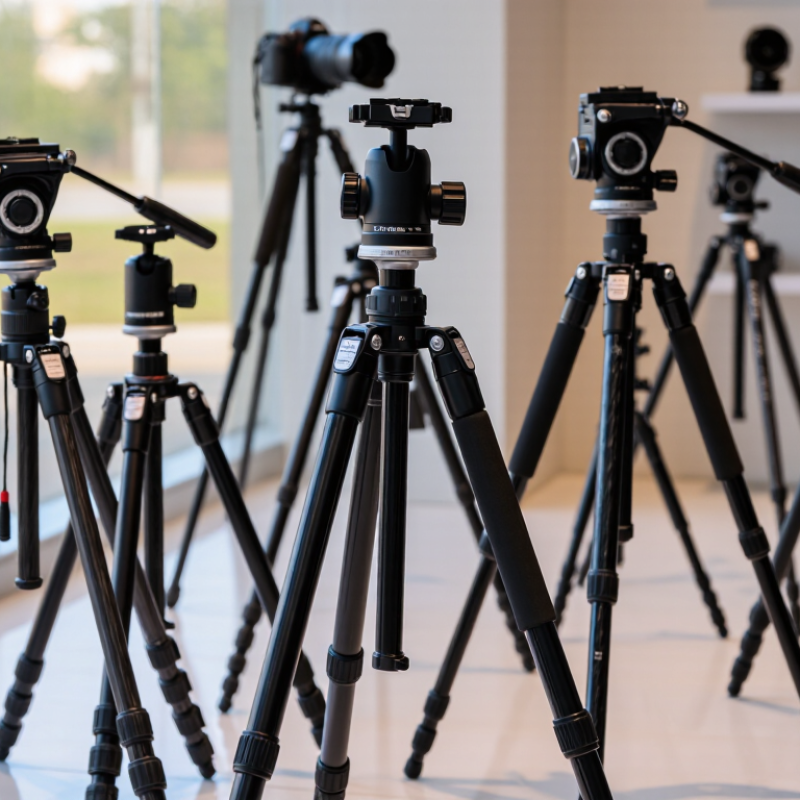
China Best Camera Tripod Manufacturers and Suppliers for Buyers

Understanding Camera Tripods and Buyer Requirements

A camera tripod is more than three legs and a mounting plate. It must hold a camera steady while allowing controlled movement and quick adjustments. For buyers, the right choice depends on camera weight, lens length, shooting location, and working style. A compact travel setup has different demands from a studio camera with a long telephoto lens. Small details matter.

Start with payload capacity, but do not match it too closely. The camera, lens, head, and accessories all add weight. A tripod rated just above the total may feel unstable, especially when a long lens shifts the balance. Check the leg locks, center column, and head separately. Twist locks can be quick to clean; lever locks are easier to inspect at a glance. Neither style suits every user.

Working height should fit the photographer without relying on a fully raised center column. Check the folded length and weight, too, if the tripod will travel in a backpack. Ask suppliers for material details, load ratings, and clear measurements. If possible, test a sample with comparable equipment: extend the legs, pan the head, and watch for wobble. Specifications help, but they never tell the whole story. One detail is easy to miss. A quick adjustment can still feel awkward with gloves on.
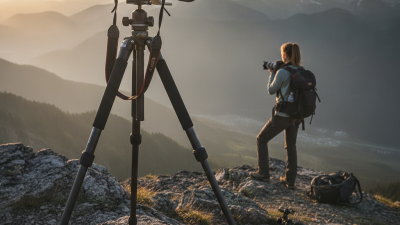
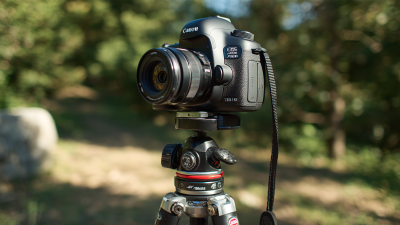
Camera Tripod Buyer Priorities

Illustrative allocation of buyer consideration across common tripod selection criteria; values are not based on a market survey.

When comparing camera tripods, buyers commonly weigh stability and load capacity alongside portability, working height, ease of setup, and price. Match the tripod’s rated payload to the camera and accessories you plan to use.

China’s Camera Tripod Manufacturing Industry

China’s camera tripod manufacturing industry combines metalworking, polymer molding, surface finishing, and assembly. Suppliers may produce aluminum legs, carbon-fiber tubes, locking collars, center columns, and quick-release components in one facility or across partner workshops. That structure affects lead times and quality control. Small details matter.

Production quality depends on more than the listed material. Tube-wall thickness, joint fit, machining tolerances, and the finish inside locking parts can affect stiffness and smooth adjustment. A tripod may feel stable on a factory floor but behave differently on uneven ground. Load testing should reflect realistic camera setups, not just a static weight placed over the center column.

Buyers can ask how suppliers inspect incoming tubes, test leg locks, and record batch defects. Sample units should be checked for wobble, leg spread, clamp grip, and repeated folding. Ask for the test method, not only a pass result. Manufacturing descriptions can sound more complete than daily production reality, so a polished catalog is not proof of consistent output. That deserves scrutiny. Supplier visits, clear inspection criteria, and written specifications help reveal gaps, though even a careful process cannot eliminate every variation.

China Best Camera Tripod Manufacturers and Suppliers for Buyers - China’s Camera Tripod Manufacturing Industry

Buyer comparison guide: the specifications below are indicative ranges for common camera-tripod categories, not guarantees for every model. Confirm tested specifications and included accessories with the supplier before ordering.

Tripod Category Common Leg Material Typical Maximum Height Typical Folded Length Indicative Payload Range Common Head Type Suitable Applications Buyer Checks
Compact Travel Tripod Aluminum alloy or carbon fiber Approximately 120–160 cm Approximately 35–50 cm Approximately 4–10 kg Ball head or compact pan-tilt head Travel photography, mirrorless cameras, and lightweight camera kits Check folded dimensions, leg-lock operation, center-column stability, and stated payload test method.
Standard Aluminum Tripod Aluminum alloy Approximately 140–180 cm Approximately 50–70 cm Approximately 5–15 kg Ball head or three-way pan-tilt head General photography, indoor use, and everyday camera setups Review tube diameter, lock security, foot design, and whether the head is included in the rated payload.
Carbon-Fiber Tripod Carbon-fiber composite Approximately 130–180 cm Approximately 40–65 cm Approximately 5–20 kg Ball head or compatible video/photo head Outdoor photography and buyers seeking lower carrying weight Confirm material construction, actual product weight, leg-section count, and payload rating for the complete setup.
Video Tripod Aluminum alloy or carbon fiber Approximately 140–180 cm Approximately 65–90 cm Approximately 5–20 kg Fluid video head, often with a handle Video cameras, controlled pans and tilts, and production work Check head compatibility, bowl or flat-base mounting, counterbalance features, and the stated payload range.
Heavy-Duty Studio Tripod Aluminum alloy or steel components Approximately 150–200 cm Approximately 70–100 cm Approximately 10–30 kg Heavy-duty video head, geared head, or compatible mounting platform Studio cameras, heavier lenses, and fixed-position shooting Verify load capacity, leg bracing, locking hardware, mounting interface, and stability under the intended load.
Tabletop Tripod Aluminum alloy, steel, or reinforced polymer Approximately 10–40 cm Approximately 15–30 cm Approximately 1–5 kg Small ball head or fixed tilt head Tabletop photography, webcams, compact cameras, and small accessories Check foot grip, mounting screw size, head adjustment range, and load suitability for the camera.
Travel Tripod with Reversible Center Column Aluminum alloy or carbon fiber Approximately 120–170 cm Approximately 35–55 cm Approximately 4–12 kg Ball head or compact interchangeable head Travel photography and low-angle or close-to-ground shooting Ask how the column reverses, check minimum working height, and assess stability with the column extended.

Types of Tripods Offered by Chinese Manufacturers

Chinese manufacturers supply several tripod types for different shooting conditions. Compact tabletop models hold small cameras close to a desk for product photos or video calls. Travel tripods fold to fit inside a backpack, while aluminum legs offer a lower-cost, sturdy option for everyday use. Carbon-fiber versions are lighter to carry, though they usually cost more. Check the folded length, leg locks, and stated load capacity before ordering; a camera body and long lens can strain a small head. Small details matter.

For video work, fluid-head tripods allow smoother pans than basic ball-head models. Monopods are another option when fast movement matters, but they cannot stand unsupported. CIPA’s 2023 shipment statistics recorded about 7.7 million digital cameras shipped worldwide. That figure is not a tripod-sales measure, but it provides useful context for continued camera use. Buyers should still test sample units: published load ratings do not always reflect stability on uneven ground. I’d also compare replacement-part availability and quality checks across batches. That can be overlooked.

How to Evaluate Manufacturers and Suppliers

When evaluating camera tripod manufacturers and suppliers in China, ask for evidence behind every specification. CIPA’s 2024 shipment statistics recorded about 8.49 million digital cameras worldwide, roughly 10% above 2023. This signals activity in the broader imaging market, not direct tripod demand. Numbers need context. Request load-test results that show the tested configuration, duration, and failure criteria. A stated payload alone may not reflect a camera’s shifting center of gravity or a fully extended center column.

Inspect production controls, not just a polished sample. Ask how the supplier checks leg-lock slippage, joint wear, tube-wall thickness, and head movement. Request inspection records, material specifications, and corrective-action examples from past defects. Test the sample. Extend every leg on a hard floor, lock the head, and apply a repeatable side load; record any movement. For carbon-fiber models, ask how tube damage and resin consistency are monitored. For aluminum models, check welds and corrosion protection closely.

Supplier reliability also depends on clear communication and realistic capacity. Compare sample lead time, production lead time, minimum order quantity, spare-part availability, and packaging protection in writing. Ask whether the same factory will make the production order. An audit helps, but it is not proof that every batch will match. I would verify a small pilot run before committing. This takes time, and sometimes the paperwork is incomplete; note that gap instead of treating an assurance as evidence.

Steps for Sourcing a Camera Tripod Supplier in China

When sourcing a camera tripod supplier in China, define the product before requesting prices. Record its folded length, working height, leg sections, material, head type, and required load capacity. Include the camera and lens weight, not just the camera body. Ask suppliers for dimensioned drawings, current production photos, and clear answers about customization. Small details matter.

Check whether the supplier manufactures tripods or sources them from another factory. A video call can show assembly stations, packaging areas, and inspection tools, but it is not proof on its own. Request a sample and test it on uneven ground. Extend and lock each leg, check the head’s movement, and look for looseness after repeated adjustments. Then test it. A sample may feel sturdy indoors but wobble with heavier equipment.

Compare quotations using the same specifications. Confirm minimum order quantity, sample charges, production time, carton dimensions, and spare-part availability. Ask how the supplier checks load capacity and finish consistency. Put approved tolerances, packaging details, inspection criteria, and remedies for defects in the purchase order. I would not choose on price alone; still, a detailed checklist can miss problems that appear during mass production. Consider arranging a pre-shipment inspection before the goods leave the factory.