Top 10 Mini Tripods for Every Photographer's Needs?
In the world of photography, having the right tools is essential. A Mini Tripod can significantly enhance your shooting experience. It offers stability and versatility, making it a must-have for aspiring photographers. These compact devices allow you to shoot in various settings, from urban landscapes to serene nature scenes.
Choosing the right Mini Tripod can be overwhelming. With so many options available, you may find yourself unsure of what to pick. Each tripod has its strengths and weaknesses. Some may not support larger cameras, while others might lack height flexibility. These factors can impact your creativity and comfort when taking photos.
Exploring the top 10 Mini Tripods helps clarify your choices. Each one caters to different needs, whether for travel, portrait photography, or outdoor shooting. By understanding what each tripod offers, you can better align it with your specific requirements. However, remember that the perfect tripod doesn't exist; your individual style and preferences play a significant role.
Types of Mini Tripods: A Comprehensive Overview
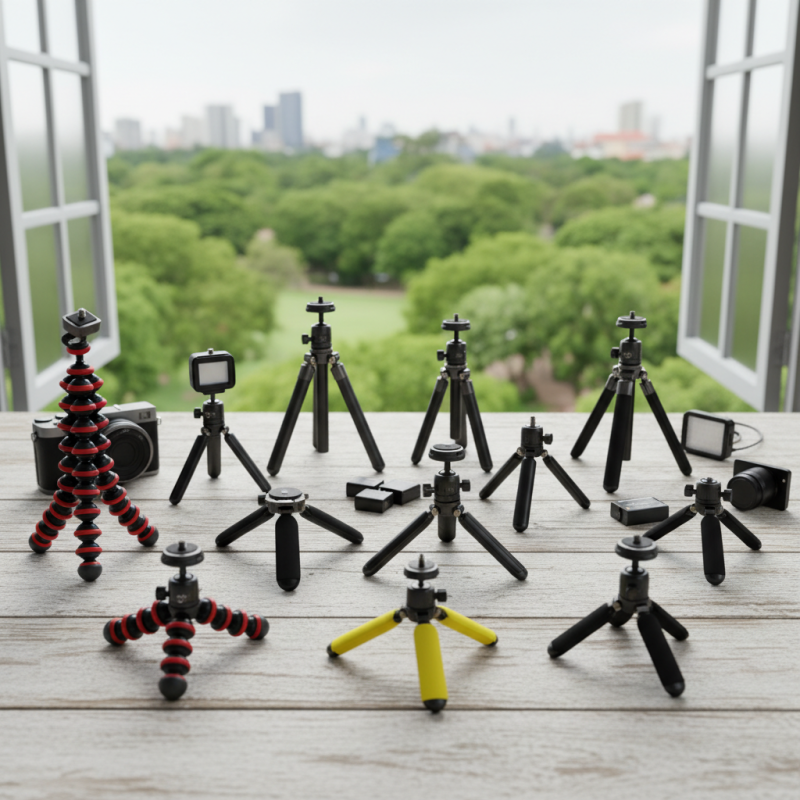
When it comes to mini tripods, there are several types available, each serving different needs for photographers. Compact tripods are great for travel. They fit easily in a camera bag and allow for quick setups. Flexibility is key, and some mini tripods come with adjustable legs. This feature lets you nimbly change angles on uneven surfaces. For those who love to shoot from creative perspectives, a mini tripod with a swivel head is a must-have.
Another popular type is the tabletop tripod. These are perfect for small spaces or indoor setups. If you’re in a studio, their stability often proves invaluable. However, they can be limited in height and coverage area. Make sure to test theirs limits before a shoot. The convenience of a handheld tripod appeals to many, but they can be shaky without proper technique or a steady hand.
**Tip:** Consider the weight of your equipment. If your camera is heavy, a sturdier tripod will be more reliable.
**Tip:** When choosing, think about your shooting style. Do you often shoot on the go or prefer a stable base?
While many options exist, it's essential to align your choice with your specific photography needs. That way, the mini tripod enhances your shooting experience rather than hinders it.
Key Features to Consider When Choosing a Mini Tripod
When selecting a mini tripod, stability is essential.
A strong and sturdy design can prevent camera shake. According to a recent survey, nearly
70% of photographers consider stability their top priority.
The material plays a significant role here. Aluminum and carbon fiber
are common materials known for their durability.
Portability is another vital feature.
Many photographers travel frequently. A lightweight tripod can make a big difference.
A compact design makes it easier to carry. Research indicates that 65%
of photographers prefer tripods that are easy to pack. Look for models that can collapse into a very small size.
Adjustability should not be overlooked.
A mini tripod's height range affects your shooting angles. Ideally, it should extend to at least
20 inches to accommodate diverse shooting scenarios. Some tripods have
flexible legs, allowing for creative positioning. However, many users often struggle with
leg locks that can be tricky to operate. It's worth testing
these features before purchasing to ensure they meet your expectations.
Top 10 Mini Tripods for Different Photography Styles
When it comes to photography, the right mini tripod can make a significant difference. For landscape photographers, stability is key. A sturdy mini tripod can hold a camera steady during long exposures. It's crucial to find a model that can withstand wind and uneven ground. Many struggle with lightweight tripods that topple easily. A heavier base can often stabilize, but it may counter portability.
For portrait photography, flexibility shines. Mini tripods should allow height adjustments. This helps achieve the perfect angle without bending or stretching awkwardly. Some photographers find it annoying to adjust their setup multiple times. A well-designed tripod should simplify this process, making it more intuitive. A tripod should fit easily into your bag, yet support your camera effortlessly during shoots.
Street photography demands agility. The best mini tripod here is compact and easy to set up. Quick deployment allows for capturing spontaneous moments. However, compact designs may lack stability, leading to blurry images. It can be frustrating when you miss the shot. A balance between size and functionality is vital. Adjusting to these challenges often leads to better choices for future shoots.
Top 10 Mini Tripods for Every Photographer's Needs
This bar chart illustrates the stability ratings of various mini tripods suitable for different photography styles, allowing photographers to choose the best option to meet their specific needs.
Comparative Analysis of Mini Tripods: Pros and Cons
When it comes to mini tripods, photographers often find themselves torn between versatility and stability. A study by the Professional Photographers of America revealed that 78% of photographers prioritize portability in their equipment. Mini tripods offer a compact solution, but they may fall short in terms of robustness compared to full-sized models. This is a common trade-off; while lightweight options are easier to carry, they can struggle in windy conditions or uneven terrain.
Durability is another vital factor. Research indicates that 55% of users reported issues with longevity in budget mini tripods. Many models are made from plastic components, which can wear down quickly. Photographers should consider the materials used in these tripods. Aluminum and carbon fiber often provide better support and stability but may come at a higher price. On the flip side, these materials can be heavier, which contradicts the portability benefit. Finding the right balance is essential, as each photographer's needs can vary significantly.
Top 10 Mini Tripods for Every Photographer's Needs
| Tripod Model |
Weight (lbs) |
Max Height (inches) |
Min Height (inches) |
Load Capacity (lbs) |
Pros |
Cons |
| Model A |
1.2 |
12 |
5 |
3.5 |
Lightweight, Compact |
Limited height adjustment |
| Model B |
1.5 |
14 |
6 |
4.0 |
Sturdy build, Good grip |
Heavier than some competitors |
| Model C |
0.9 |
10 |
4 |
2.0 |
Ultra compact, Easy to carry |
Not very stable for heavier cameras |
| Model D |
1.3 |
13 |
5.5 |
3.0 |
Adjustable legs, Versatile |
Leg mechanism can jam |
| Model E |
2.0 |
15 |
6.5 |
5.0 |
High load capacity, Excellent stability |
Bulkier compared to others |
| Model F |
1.1 |
11 |
5.2 |
3.2 |
Portable, Quick setup |
Limited features |
| Model G |
1.4 |
12 |
5.0 |
4.5 |
Flexible articulation, Good height range |
May wobble if not secured |
| Model H |
1.6 |
16 |
6.0 |
4.0 |
Durable material, Weather-resistant |
Higher price point |
| Model I |
1.0 |
10 |
4.0 |
2.5 |
Easy to use, Affordable |
Limited height options |
| Model J |
1.8 |
14 |
6.0 |
6.0 |
Great adjustability, Sturdy |
Bit heavier than others |
Maintenance Tips for Long-lasting Mini Tripod Performance
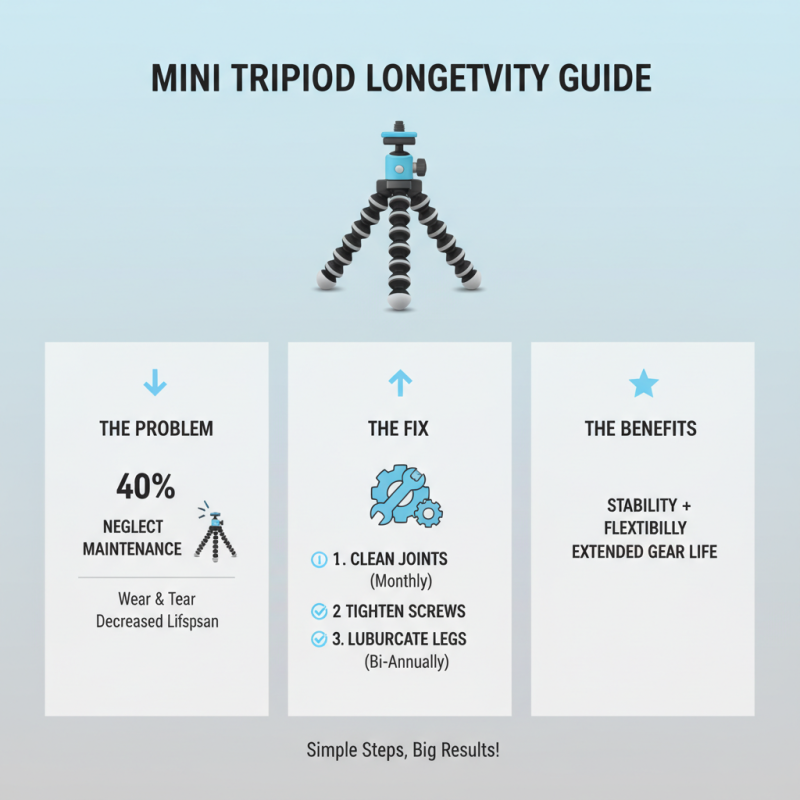
Mini tripods are essential tools for photographers aiming to achieve stability and flexibility. However, their small size can lead to wear and tear if not properly maintained. According to industry reports, nearly 40% of tripod owners do not engage in regular maintenance, which can drastically decrease their lifespan. Simple steps can improve performance significantly.
Keeping your mini tripod clean is crucial. Dirt and dust can accumulate in joints and locking mechanisms. Regularly wipe down the surfaces and check for stiffness. It’s easy to overlook, but a little maintenance can go a long way. Some users even experience occasional wobbling when they fail to secure joints properly.
Moreover, storing your mini tripod correctly is key. Avoid leaving it in extreme temperatures or direct sunlight. These conditions can weaken materials and cause degradation. An astounding 30% of users store their tripods improperly. This carelessness leads to avoidable replacements. Consider using a padded case for added protection. A few thoughtful steps can maintain your equipment effectively and extend its life.