Leave Your Message
Choosing the best Carbon Fiber Tripod suppliers in China takes more than comparing catalog prices. A polished product photo cannot show how a leg lock feels after repeated adjustments, or whether a center column slips under a camera’s weight. Buyers should examine materials, construction, load ratings, production experience, and quality-control procedures. Ask for clear specifications, including tube dimensions, joint design, folded length, and stated payload. Small details matter.
A capable supplier should explain how its tripods are tested and provide consistent answers about sampling, customization, packaging, and lead times. Request a sample when practical. Check the finish, leg spread, locking action, and stability on uneven ground. Then compare the sample with the written specification. That step is easy to skip. It shouldn’t be.
China has manufacturers with different strengths, from established photography-accessory producers to factories focused on custom projects. No single supplier is best for every buyer. A retailer may prioritize dependable repeat orders, while a brand developing a lightweight travel model may need flexible design support. Verify company information and evaluate communication, documentation, and sample quality before making a large commitment. Certifications and test reports can help, but confirm that they apply to the specific product and are current. Claims alone are not proof. This guide explores practical ways to identify and compare Carbon Fiber Tripod suppliers in China, while noting where available information may leave room for doubt. That caution is useful. A careful review can reduce surprises, though it cannot guarantee every production run will be perfect.
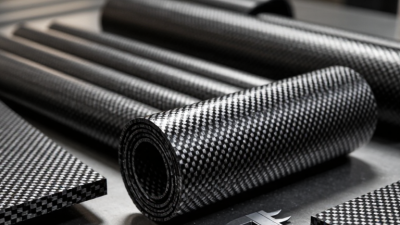
A carbon-fiber tripod’s “K” rating describes tow size: 1K tow contains about 1,000 filaments, while 12K contains about 12,000. It does not indicate fiber strength or tripod quality. Larger tows can spread wider across a tube, but performance also depends on resin, fiber direction, and compaction. The U.S. Department of Energy’s 2016 carbon-fiber cost assessment highlights how processing affects composite cost; the same principle matters in tripod tubes. Cheap fiber alone does not guarantee a stiff, durable leg.
Layup is the tube’s fiber arrangement. Longitudinal layers help resist bending; angled layers improve torsional stiffness, which matters when a camera pans or a leg twists on uneven ground. Material grades describe properties such as tensile strength and modulus, not tow count. ASTM D4018 outlines methods for testing carbon-fiber tow properties, but a tow test cannot predict finished-tripod performance by itself. Look for tube-level test data, especially stiffness and load testing. Details vary, and published figures may not reflect real field use.
Tips: Ask suppliers for a cross-section drawing and the fiber orientation by layer. Compare tubes at the same length and diameter. A light tube may feel lively in a breeze; sometimes, more stiffness is worth the extra weight.
| Specification | What It Means | Typical Tripod Relevance | Questions to Ask a Supplier |
|---|---|---|---|
| 1K tow | A bundle containing approximately 1,000 continuous carbon filaments. “K” denotes one thousand filaments; it does not describe fiber strength or quality. | Fine tow can support narrow patterns and detailed fabric construction. Its suitability depends on the fabric architecture and tube design. | Is the tow woven, spread, or used in a unidirectional reinforcement? Can the supplier provide fabric and laminate specifications? |
| 3K tow | A bundle containing approximately 3,000 filaments. It is commonly used in woven carbon-fiber fabrics. | Often associated with visible woven surface patterns on composite tubes. Appearance alone does not establish stiffness or load capacity. | Is the visible weave structural or primarily a surface layer? What are the tube wall construction and tested load limits? |
| 6K tow | A bundle containing approximately 6,000 filaments. Tow size is a filament-count designation, not a material grade. | Can be used in composite fabrics or other reinforcement forms. Larger tow may affect fabric texture and drape, depending on construction. | What fabric weight, weave style, and resin system are used? Are these specifications consistent across production batches? |
| 12K tow | A bundle containing approximately 12,000 filaments. It is larger than 1K, 3K, and 6K tow by filament count. | May suit production approaches that use larger bundles, but does not by itself indicate a stronger or better tripod tube. | How does the chosen tow affect tube thickness, surface finish, and manufacturing consistency? Can samples be evaluated? |
| Unidirectional layup | Fibers are aligned mainly in one direction within a ply. Composite strength and stiffness are direction-dependent. | Fiber orientations can be selected to address axial, bending, or torsional requirements in different tube sections. | Can the supplier provide a layup schedule or orientation description for each tube section? |
| Woven-fabric layup | Fibers are interlaced in two directions, commonly described by weave patterns such as plain or twill. | Provides reinforcement in more than one direction and can create a visible surface pattern. Performance depends on the complete laminate. | What weave and fabric weight are used, and is the woven layer structural, cosmetic, or both? |
| Hybrid layup | Combines different reinforcement forms or fiber orientations in one laminate. | Can balance stiffness, strength, handling, and manufacturing needs when properly designed and controlled. | Which layers are used, where are they placed, and what inspection or testing verifies the finished tubes? |
| Standard-modulus carbon fiber | A general material category describing fiber stiffness. Exact properties vary by fiber grade and manufacturer. | May be suitable for many tripod designs, but tube geometry, layup, resin, and manufacturing quality also determine performance. | What is the exact fiber grade and its published tensile-property data? Can documentation be supplied for the material used? |
| Intermediate- or high-modulus fiber | Higher-modulus categories describe fibers with greater stiffness than standard-modulus grades; they are not automatic measures of overall product quality. | May support stiffness-focused designs, but the benefit depends on laminate design and can involve different cost and damage-tolerance trade-offs. | What grade is specified, and how does the finished tube perform in stiffness, impact, and durability tests? |
| Resin and cure process | The resin binds the reinforcement; curing consolidates the composite into a finished part. Resin type and process affect the laminate. | Influences bonding, surface finish, dimensional consistency, and performance under the conditions the tripod is designed to handle. | What resin system and curing process are used? How are voids, dimensions, and batch consistency checked? |
| Supplier verification | A practical assessment of documented specifications, production controls, samples, and product testing. | Useful when comparing suppliers without relying on tow-count labels or appearance as a substitute for measured performance. | Request material records, tube drawings, sample parts, quality-control criteria, and relevant load, stiffness, or durability test results. |
Note: Tow count identifies the approximate number of filaments in a bundle. It does not, on its own, determine the strength, stiffness, weight, or quality of a finished tripod. Compare the complete laminate design, dimensions, material documentation, and test results.